
2026-07-20
Germany to Change Truck Driving Bans. End of Differences Between Federal States
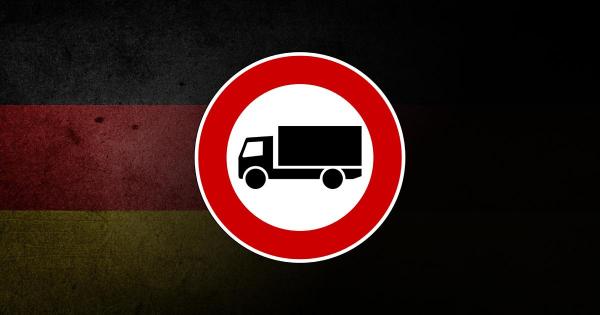
Germany plans to abolish truck driving bans that apply only during regional public holidays. The proposal is intended to simplify route planning and reduce delays at state borders, but it has not yet become law.
The German Federal Government has approved a draft bill that would abolish truck driving bans applicable on public holidays observed only in certain federal states (Länder). If the new regulations enter into force, restrictions will apply only on nationwide public holidays celebrated throughout Germany. The proposal forms part of the deregulation package adopted by the German government on 15 July and will now proceed to the parliamentary legislative process. The planned changes are intended to simplify transport planning, reduce administrative burdens for transport companies, and eliminate situations in which truck driving bans apply on one side of a state border but not on the other.
End of Regional Differences
At present, truck driving bans in Germany apply not only on Sundays and nationwide public holidays, but also on certain holidays observed exclusively in selected federal states. As a result, a carrier may legally operate in one federal state, only to become subject to a driving ban immediately after crossing into another.This applies, among others, to:
▫️ Corpus Christi (Fronleichnam),
▫️ All Saints' Day (Allerheiligen),
▫️ Reformation Day (Reformationstag).
These regional holiday bans are to be abolished. Truck driving bans applicable on nationwide public holidays will remain unchanged.
Easier for Transport and Logistics
In the explanatory memorandum accompanying the bill, the Federal Government states that abolishing regional truck driving bans is intended to reduce bureaucracy and improve the efficiency of road freight transport. Under the current rules, transport companies face additional organisational burdens because they must plan routes according to different public holiday calendars applicable in individual federal states.The government argues that harmonising the rules will improve transport efficiency, simplify operations for both businesses and public administration, and eliminate unnecessary truck stops at the borders between federal states.
Minister: Current Rules Generate Unnecessary Costs
Federal Minister for Digital Affairs and State Modernisation Karsten Wildberger also commented on the proposed changes. In an interview with RTL and ntv, he said that the current system creates a "patchwork" of different regulations and that trucks are often forced to stop at the borders of federal states simply because a regional public holiday is observed on one side of the border but not on the other.According to the minister, this affects around 100,000 truck journeys each year, requiring additional logistical arrangements and generating unnecessary costs for the road transport industry.
What Will Remain Unchanged?
The draft bill does not provide for any changes to Germany's nationwide truck driving ban applicable on Sundays and statutory public holidays. The prohibition laid down in Section 30(3) of the German Road Traffic Regulations (StVO) will remain in force. It applies to:▫️ trucks with a maximum permissible weight exceeding 7.5 tonnes;
▫️ all trucks with trailers engaged in commercial goods transport.
The driving ban remains in force from 00:00 to 22:00. Statutory exemptions will also remain unchanged, including those covering the transport of perishable food products and vehicles performing special public-service tasks.
The Federal Government's approval of the draft bill does not mean that the law has already changed. The proposal must still be considered by the Bundestag and the Bundesrat. Only after the legislative process has been completed can the new regulations enter into force. At present, no planned effective date has been announced.


